
One of the biggest decisions we make on a daily basis is what to save and what to throw out. A tin can? Throw it out. A plastic container? Might be useful someday. Old newspapers? Into the trash can. Old copies of Spotlight? Keep for future reference or give to a friend.
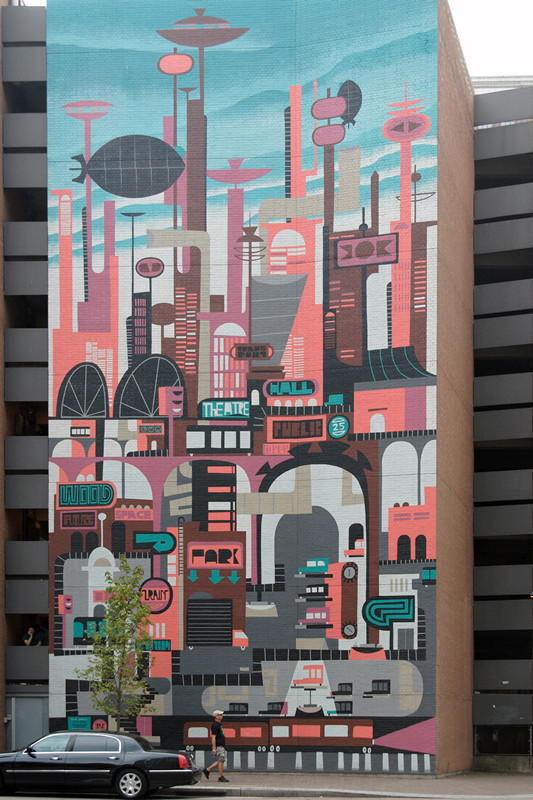
Yesterday’s Tomorrow: a mural in Pittsburgh by Brian Holderman. Photo: Mike Pilewski
This decision can be a difficult one when dealing with things that have a memory, such as books, old letters and photos.
Where it gets really complicated is when we, as a community, have to decide what is worth keeping. Which buildings do we preserve and maintain? Which do we allow to be torn down to make room for the city of tomorrow? And how much inconvenience do we tolerate with either one?
These questions came to a crescendo on March 31, when one of Pittsburgh’s biggest landmarks was dismantled.
The Civic Arena was no ordinary stadium. Built in 1961, it was an architectural innovation: a perfectly round dome with a metal roof that opened up. The arena, which resembled a giant alien spacecraft, was mainly a venue for theater, the circus and concerts. My parents tell of a magical evening before I was born, when the roof opened up and revealed the starry sky in the middle of a Harry Belafonte concert. Long before Woodstock and stadium concerts, this must have been breathtaking.
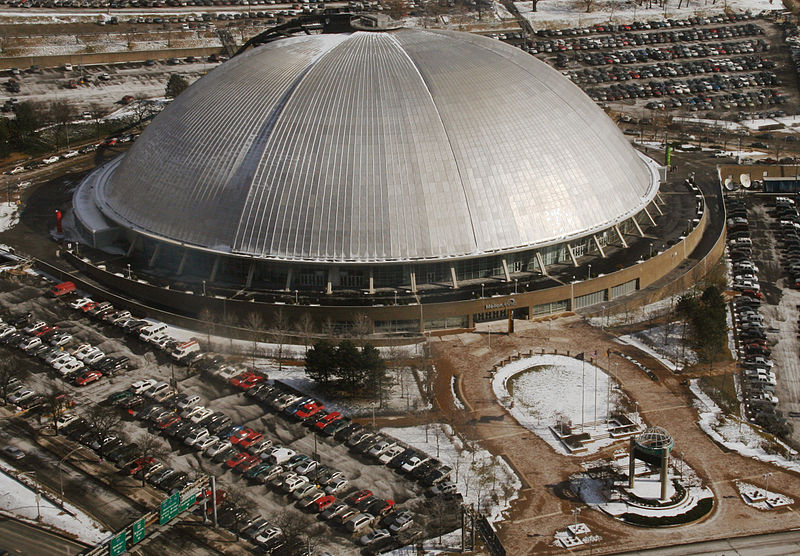
Pittsburgh’s Civic Arena. Photo: Derek Jensen
But then…
Alas, the roof-opening mechanism rarely worked as it should. Sometimes the roof would get stuck when it was only partway open. Later, as energy costs rose, the roof remained closed and we were told it was too expensive to operate. I never got to experience it.
Protests by a local historical society failed to save the building
As years went by, the rest of the building became difficult to maintain, and it was sitting on very valuable property between the downtown area and several universities. So — in spite of protests by a local historical society — the decision was made to demolish it.
Maybe we can’t keep all of our old buildings. (Where would we put them?) And I admit, the grounds of the former Civic Arena are perhaps better suited to housing Pittsburgh’s burgeoning university population.
History or business?
But sometimes the decision to keep something or to throw it out is more of a whim than a strategy. One of the biggest landmarks in my own neighborhood in Pittsburgh, the elegant Windsor Hotel, was demolished in 1950 to make room for an ugly shopping center. A few years ago, the shopping center was torn down (the leaky roof and antiquated wiring made it too difficult to maintain) and an even uglier one was put up.
The nearby Point View Hotel was a station on the Underground Railroad. It was torn down in 2007 and a medical center put up in its place.
In 2010, on the same street, a battle raged to save a beautiful, castle-like residence built around 1900. The owner needed to sell the property for the money, but the local historical society, which consists of three people, couldn’t afford to buy it. It was feared that a state representative would buy the property so that he could make a parking lot for his funeral home across the street.
Three other grand Victorian homes in the area had been destroyed: one for a road, one for a parking lot, and one for a strip mall. The Wigman House was the last of its kind.
In the end, the city council agreed to list it as a historic building — and the owner changed her position when she realized the property was worth a lot more with a historic building, and not just any old house, on it.
Some things we throw out, but some — fortunately — we keep.
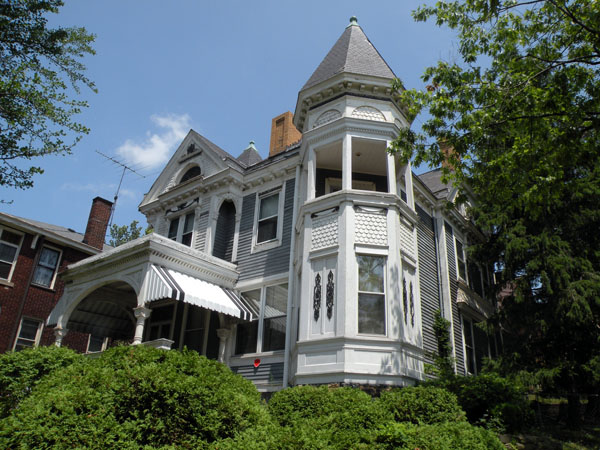
The Wigman House. Photo: Lee Paxton


