
Women with abusive husbands make all sorts of excuses for them: “He’s normally not like that.” “He’s sorry.” “He’s trying to change.” “He provides for me.” “I don’t have to worry about things.” “I’d never survive without him.” “There’s no alternative.”
(Men can experience this, too, as the target of emotional abuse. The scars are on the inside.)
We can’t really blame the victims for their flawed logic. But at what point do you take the kids and leave? How much of a black eye do you need to get the message? When do you realize that your own safety is more important than anything else?
America, Europe and Asia have been married to nuclear power for some time now, and each has gotten a black eye from it: at Mayak (Kyshtym, Russia), 1957; Sellafield (Seascale, England), 1957; Three Mile Island (Harrisburg, Pennsylvania), 1979; Chernobyl (Pripyat, Ukraine), 1986; and Fukushima (Japan), 2011.
I can name a further example — one that I saw with my own eyes.
 The Hanford Research Facility, near the city of Richland in Washington state, produced plutonium for the atomic bombs that were dropped on Japan. Routine operations leaked a lot of radiation. So did some foolish experiments, like releasing radioactive iodine into the air to see how far it would spread. Sixty years later, much of the area is still contaminated.
The part of the property closest to Richland has an operating nuclear reactor that conforms to modern safety standards. But the Hanford site is extensive — 1,500 square kilometers — and you can see quite a bit more on a boat ride down the Columbia River alongside it.
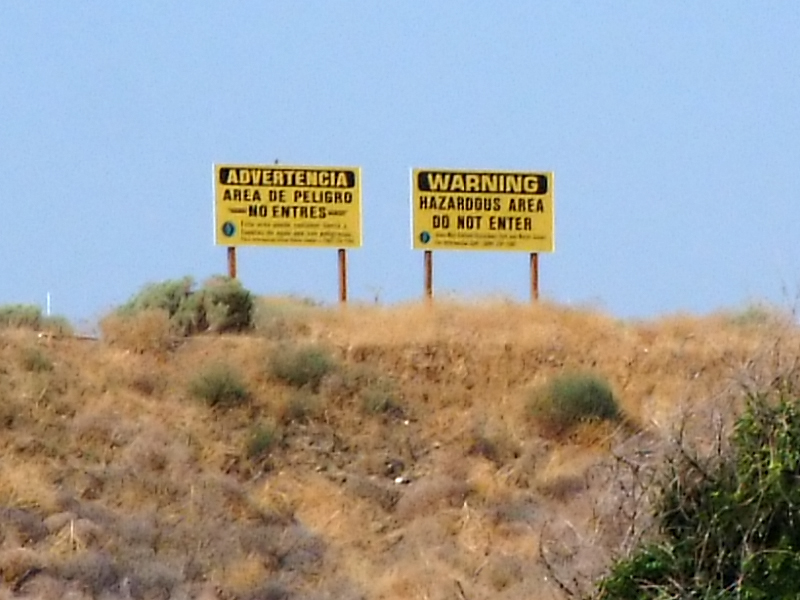
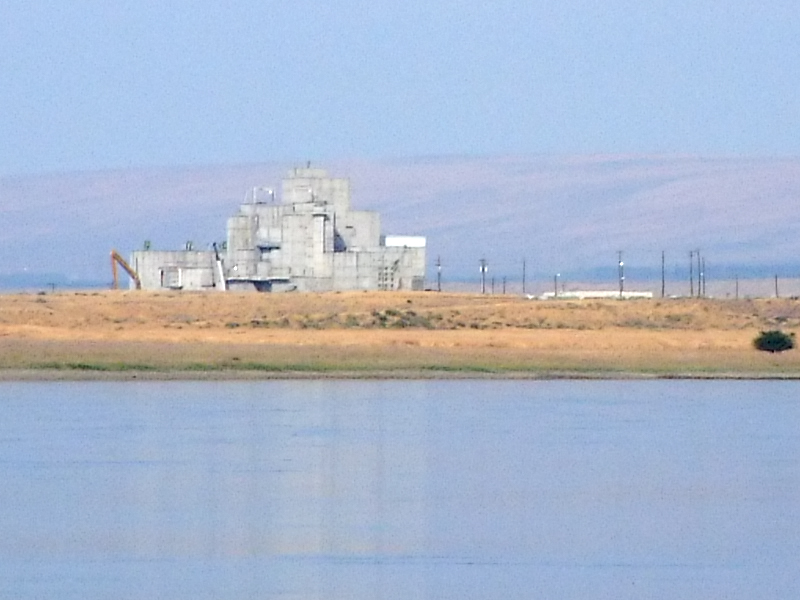 The first sight was a ghost town — buildings abandoned because they’re radioactive. Signs warned of a hazard that can’t be seen, smelled, or tasted. Then I saw men in “banana suits” shoveling topsoil into the back of a truck — the only known method for decontaminating an area (even such a large one). Further along was the sight of four enormous reactors that had been sealed in concrete.
Although this area was harmful to humans, nature didn’t seem to mind. In fact, it was teeming with birds, fish and animals that had grown to a very large size, because humans hadn’t been able to disturb them.
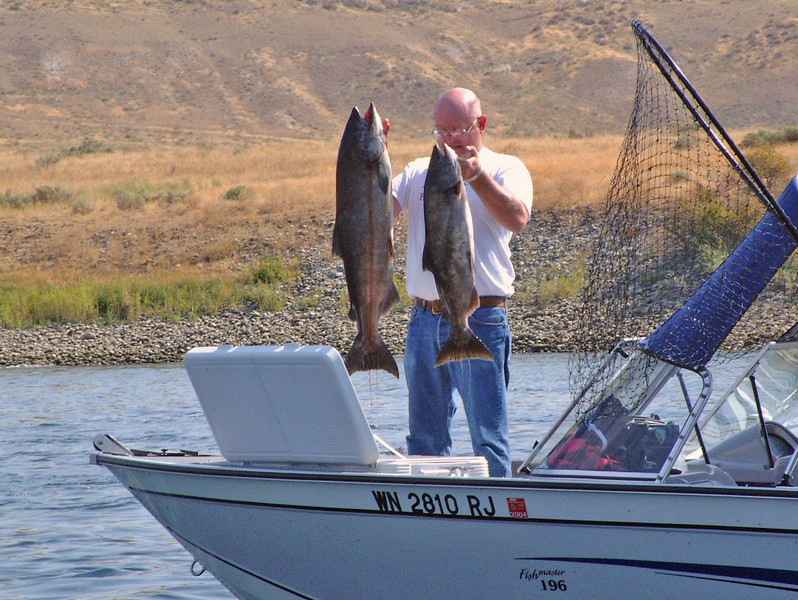 Stranger, though, was the attitude of the local people. A man showed off the giant fish he’d caught within sight of the reactors. Other people were walking around on the site of the ghost town or even camping (illegally) on the Hanford side of the river. The opposite shore had a large vineyard.
“We live here, and life goes on,” one of the PR ladies from Richland explained to me. Hanford is trying to correct the mistakes of the past by leading a national project to convert liquid nuclear waste into glass blocks. Billions of dollars have been spent to remove and bury the topsoil, so as to restore the natural environment. And with the old reactors “cocooned”, no further radiation should escape.
“Cocoon”: there’s a word for you. As though one day a beautiful butterfly will emerge. The German Sarkophag is even more cynical — as though you could open it up in a few thousand years’ time and find King Tut‘s treasure inside.
I love how German is so much more succinct than English, too. You can express the whole argument in one word: Atomausstieg. Think about it: it’s like getting off a vehicle that’s done all right in bringing us to where we are, but that we can’t steer and that’s ultimately going somewhere we don’t want to go. If the regular Ausstieg isn’t enough, there’s also the Notausstieg, or emergency exit. If disaster strikes and you’re trapped in a subway tunnel, you can get to a shaft and climb up a ladder, leaving behind that dark place as you see the light.
Germany may now have seen the light. Perhaps she’ll even file for divorce. What will it take to convince America?


