
The next US presidential election isn’t until November 2016, but the campaigning is well under way. Because neither the sitting president nor the vice-president nor the previous opponent is a candidate, new ideas and new faces have a shot at success. The last time this happened was in 2008, and it enabled a little-known senator named Barack Obama to rise to prominence.
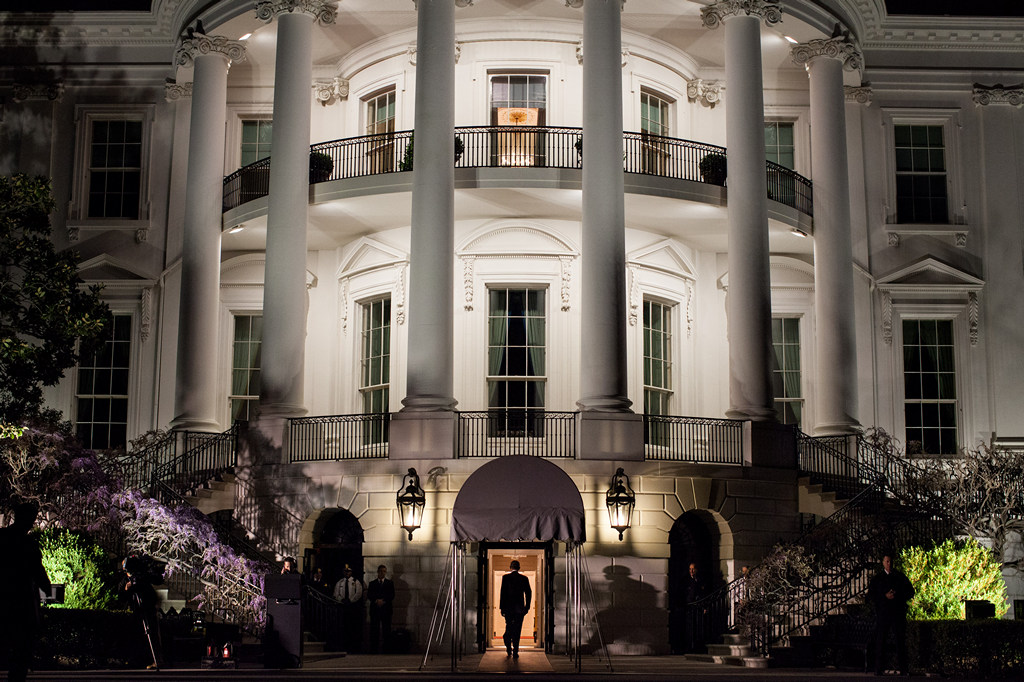
Barack Obama enters the White House. Who will follow him in 2016? Photo: Pete Souza
In the United States, anyone who joins a party and files an application can run for office under that party’s banner. Less popular candidates are eliminated in a series of debates, starting next month, and in state-by-state “primary elections”, which start on February 1. At each party’s convention, to be held next July, delegates select their nominee for the general election.
In the coming months, the field will include at least 18 Republicans and five Democrats. Already, this is creating some problems.
Five’s company, 18’s a crowd
The Republican National Committee says it can’t have 18 people debating at once, so it will invite only those candidates who rank among the top 10 in the five most recent national polls. This will be a dirty business if, as at present, several candidates are polling around 3 or 4 percent in surveys with a margin of error about that large. Fox News, which is hosting the first of 12 Republican debates, on August 6, says it will host another debate earlier that day for those excluded. CNN will follow the same strategy for the second debate, on September 16. This hasn’t made any of them less furious.
The news media would rather predict a winner
Although the television networks have been interviewing, or trying to interview, most of the candidates, this attention has not been evenly distributed. Mostly, the networks have been trying to predict a winner, favoring former Secretary of State Hillary Rodham Clinton and former Florida Governor John Ellis Bush, whose name is often abbreviated to “Jeb”. The reason? These are the candidates with the most established networks of donors, whose money will allow them to travel more, hire more staff, and buy more advertising.
As in 2012, money will be critical in this election. Oil-industry billionaires Charles and David Koch announced last winter that their network of about 300 donors would spend $889 million — far more than either party — to influence the outcome of this election. Clinton’s campaign is said to have a goal of raising $2.5 billion, more than was spent by all candidates in 2012.
What’s this election about?
As to what the voters will be deciding upon, the candidates haven’t really made up their minds. For now, they’re in the process of considering ideas that think tanks and advisers are peddling to them. Almost all of the current candidates are running not because they have any solutions of their own to offer, but because they feel they have some kind of calling or mandate or qualification or inner passion or innate popularity to do the job. This definitely includes Bush, who would be unknown were he not the brother of a certain George W. Bush, and Clinton, the wife of a certain Bill Clinton.
Most candidates are still deciding their positions
Recent events have pushed several core Republican issues out of the debate. Earlier this month, the Supreme Court legalized same-sex marriage and upheld a pillar of Obamacare, making those battles impossible to fight. Barack Obama is restoring normal relations with Cuba after a 56-year embargo, and a multinational agreement has been reached with Iran (which the Senate may or may not accept). Even the pope’s recent appeal to acknowledge man-made climate change and take care of the planet has caused some divisions among conservatives. Not least, it was revealed this month that for 30 years, the Exxon corporation funded a propaganda effort to present man-made climate change as a hoax and contributed money to various outspoken Republicans in order to ensure their support of this fallacy.
The Republicans
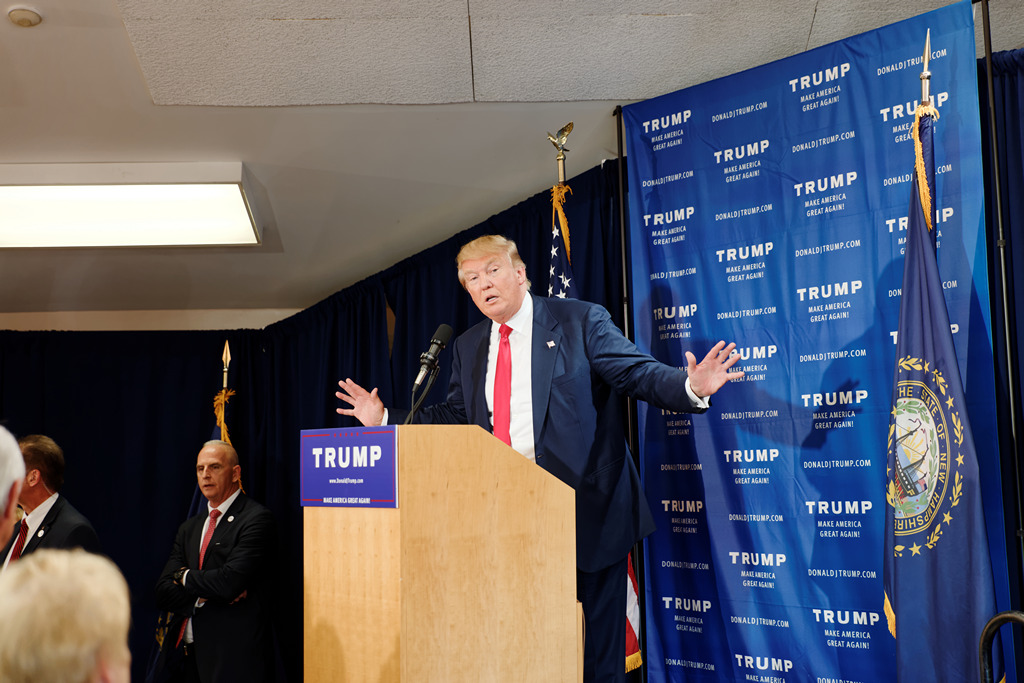
Donald Trump speaks in Laconia, New Hampshire, July 16, 2015. Photo: Michael Vadon (CC2.0)
Without these hot-button issues, and with no concrete policies so far, the Republican candidates are running strictly on philosophy and personality. They can be categorized as:
The corporatists
Funded by big-business interests and some of the wealthiest Americans, they promise economic growth by curbing workers’ rights, limiting the regulation of banks and industry, and further reducing taxes on the rich. This group includes Wisconsin Governor Scott Walker, Ohio Governor John Kasich, Texas Governor Rick Perry, former Florida Governor “Jeb” Bush, and former head of Hewlett-Packard Carly Fiorina.
The hawks
They are called to action because they see immediate threats everywhere, particularly from Iran, Russia, China, and the Islamic State. This group includes South Carolina Senator Lindsey Graham, Virginia Governor Jim Gilmore, Florida Senator Marco Rubio, former Louisiana Governor Piyush “Bobby” Jindal, and, to a lesser extent, former New York Governor George Pataki.
The theocrats
They believe that a higher power overrides the Supreme Court and the US constitution. This group includes former Arkansas Governor Mike Huckabee, former Pennsylvania Senator Rick Santorum, and retired neurosurgeon Ben Carson.
The independent thinkers
They make up their own minds and say what they want, much to the displeasure of the party establishment. These include isolationist Kentucky Senator Rand Paul, who sees the US government as threatening the constitutional freedoms it’s supposed to uphold; Texas Senator Rafael “Ted” Cruz, one of the orchestrators of the 2013 shutdown of the federal government as a protest against Obamacare; New Jersey Governor Chris Christie, whose politics appear practical-minded to some and gangster-like to others; and real-estate businessman Donald Trump, whose blunt remarks have made him the most popular and the most unpopular Republican at the same time. Unnoticed by the media, former Internal Revenue Commissioner Mark Everson seeks to punish the heads of companies that engage in illegal behavior.
The Democrats
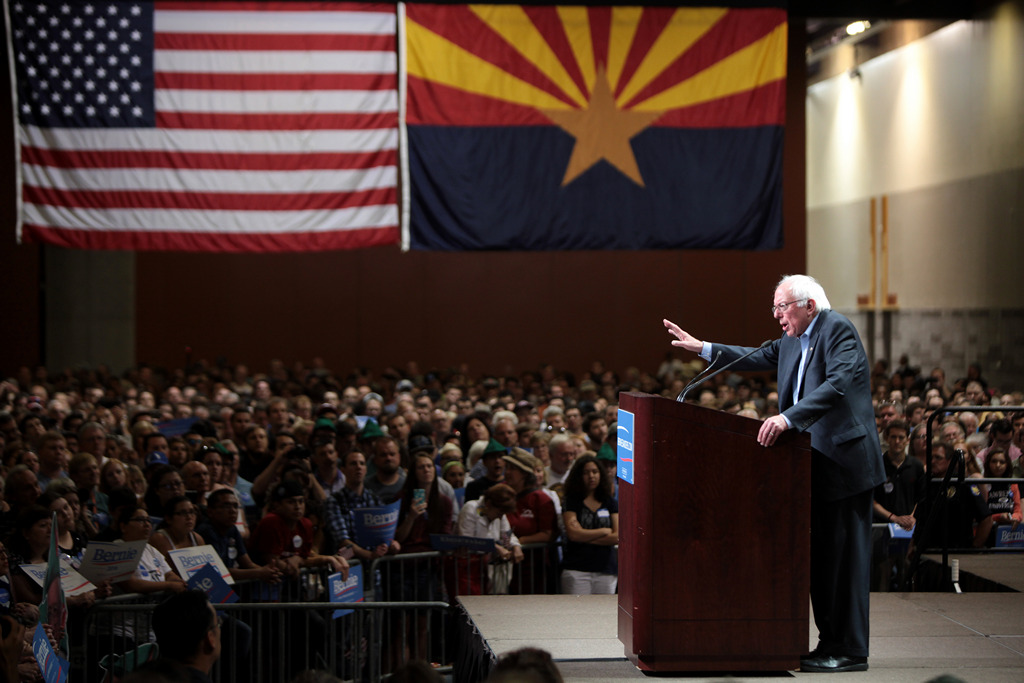
Bernie Sanders speaks in Phoenix, Arizona, July 18, 2015. Photo: Gage Skidmore (CC2.0)
The Democrats are also starting to take sides as:
The anti-corporatists
Inequality of wealth and opportunity is the biggest problem facing the United States, says Vermont Senator Bernie Sanders, who seeks to break up the big banks, raise taxes on the rich, and eliminate tuition fees at public colleges and universities. Former Maryland Governor Martin O’Malley has parroted Sanders’ goal of breaking up the banks, while remaining mum on other issues.
The establishment
Democratic Party insiders see former Secretary of State Hillary Clinton as the candidate best capable of beating any Republican — and pollsters agree. Beyond robotically intoned platitudes about fighting for working people, however, Clinton has laid out no major policy proposals except to vaguely repeat Sanders’ ideas about banks and college tuition. With Clinton having served on Walmart’s board of directors, and with her prior election campaigns having been heavily funded by the big banks and influential media figures, it is unclear where her loyalties — or those of the media — lie.
Former Republicans
The actions of George W. Bush inspired both Lincoln Chafee from Rhode Island and Jim Webb from Virginia to defect from the Republican Party while serving in the Senate. Both are in the race mainly for the purpose of questioning Hillary Clinton’s judgment in voting to authorize the Iraq War as a senator in 2002. Chafee, who was later governor of Rhode Island, proposes a more internationalist foreign policy, whereas Webb, who was secretary of the navy under Ronald Reagan, seeks to present himself as a more serious candidate.
Altogether, the candidates don’t have many ideas, but they can be depended upon to say amusing and embarrassing things. These are already too numerous to list here, but don’t worry. As in the last four elections, Fascinating America will, in the coming weeks, present profiles of each of the candidates for president, and will keep you up to date at critical points in the election process.


