
One of Aesop’s many fables is the story of two snobs, the town mouse and the country mouse. The town mouse goes to visit his cousin, who lives in the country. The town mouse doesn’t like the simple food he’s offered, so he invites the country mouse to visit him in the city. There they eat sweet things, but the country mouse is frightened by dogs, and leaves. The two worlds could not be more different and cannot be brought together.
That’s the stereotype, anyway, and one that I thought of a lot when growing up in Pennsylvania. The cities in the corners of this rectangular state — Pittsburgh, Philadelphia, Erie and Scranton — could not be more different from the cornfields, cows and silos of the interior. The middle part of Pennsylvania is crossed by the Appalachian Mountains, which put some space between even the farming communities.
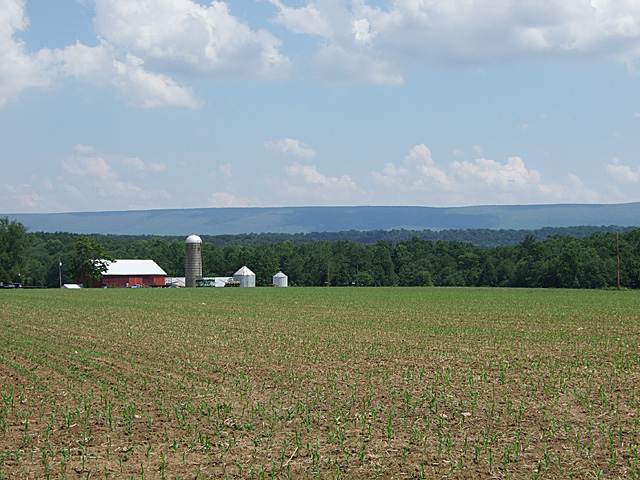
Farm country in central Pennsylvania. Photo: Mike Pilewski
My mother’s relatives live in an area surrounded by mountains, in and around a village of 1,600 people called Pleasant Gap. (The word “gap” here means “mountain pass”.) Like the mouse of the fable, I had the opportunity last summer to visit my cousin in the countryside. What I found was not at all what I’d expected.
What I’d expected to find was small-town America, which is not in a good state. My father’s relatives, for example, come from a town of 10,000 that used to have closer to 50,000 people. All major businesses have closed, including the movie theater, and dining opportunities have been reduced to a single restaurant. The people who once lived in this town, as in other towns from Schenectady, New York, to Toledo, Ohio, have moved to “exurbs” — new communities that are closer to highway exits, shopping centers and cities, and that offer more living space.
In the villages, people have everything they need
In the villages, however, people already have what they need: property, space, fresh food, social contact. Prices are low, and business opportunities still exist. People know where to find what they need — be it goods or customers — in neighboring villages.
Far from being a ghost town, Pleasant Gap today has houses that are all lived in and freshly painted, many of them with additions or sheds in the back. People of all ages live here and mark the passing of the seasons. The highlight of the year is the county fair in late August, where they compare their hens and horses and show off their prize vegetables.
Even the county fair has wireless Internet access. Cable television brings in stations from New York City, and Amazon.com delivers anything you want to your door. But the hens and vegetables really are more important: the savory, deep orange yolks of eggs laid by chickens you’ve fed that afternoon, the lettuce, broccoli and tomatoes picked from a large garden behind your house only minutes before you’ve sat down to eat. If you want fish or deer meat, just go into the woods and get it (at the right time of year and with a state license, of course).
For complete control of your life, you can build your own house, as my uncle did — doing everything from drawing the blueprints to hammering in the nails himself — or you can build all the furniture inside it, as my cousin has done with his phenomenal woodworking skills. His wife will see a bed or cupboard in a catalogue, and he’ll figure out how it’s put together and make it for her.
What more could a person want?


