
Halloween has come early to Pittsburgh this year. The decorations are already up on the neighbors’ houses: jack o’ lanterns, dried cornstalks and scarecrows are scaring away evil spirits five and a half weeks before October 31.
The Halloween colors, orange and black, have also appeared a lot downtown. They’re used on signs that announce road construction, detours and inconveniences of all kinds. And Pittsburgh is preparing for some major inconveniences.
On Thursday and Friday, the leaders of 19 countries and the European Union — among them Barack Obama and both main candidates for the German chancellorship — are meeting here for the economic summit of the Group of Twenty (G-20) Finance Ministers and Central Bank Governors.
Although Pittsburgh has many things to be proud of, its infrastructure is not one of them. The city cannot handle traffic even on a normal day. The small, triangular downtown area is surrounded by rivers and mountains, and the narrow streets are perpetually under repair. During the summit, three checkpoints will control vehicle access to the entire city.
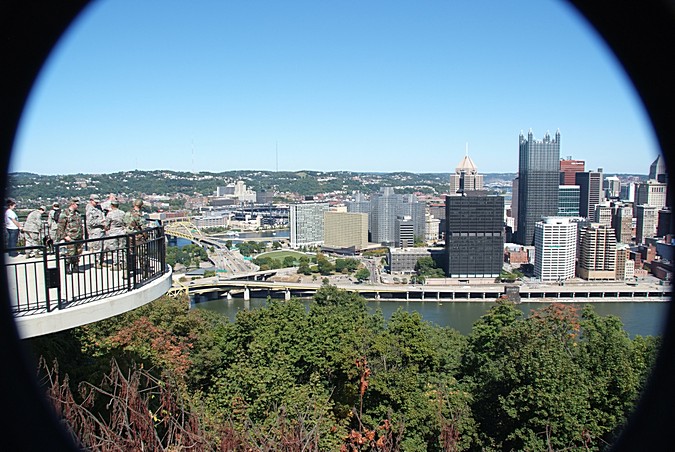
Members of the National Guard keep an eye on downtown Pittsburgh. Photo: Mike Pilewski
“With only three months to prepare, the city has done well,” Mayor Luke Ravenstahl told the TV cameras on Tuesday, without seeming convinced of his own words. Security has been thought out, but important roads and buildings are under repair, and without enough hotel rooms, some G-20 delegates are said to be spending the night in other Pennsylvania towns.
Ravenstahl and local business leaders feel that hosting the summit will attract investment and tourists. However, the Pittsburgh Tribune-Review, which objects to anything the Democratic mayor, Democratic governor and Democratic president do, would prefer not to see the thousands of G-20 protesters, which it considers to be an organized army coming to do combat.
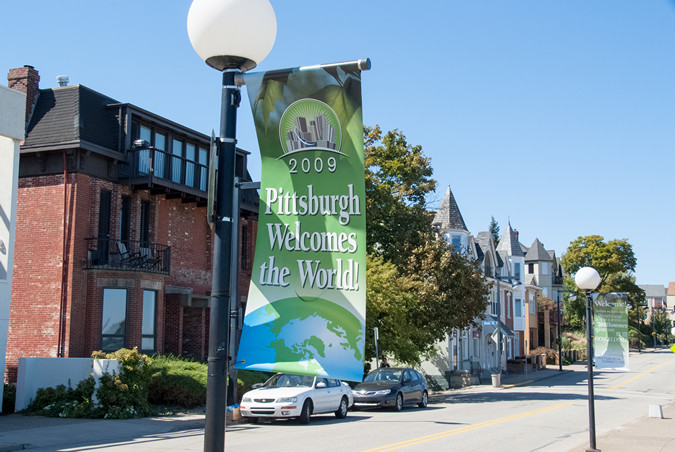
Pittsburgh welcomes the world. Photo: Mike Pilewski.
Pittsburgh is experiencing “a police presence like the city has never seen,” in the words of one TV news reporter. The county is even letting 100-200 inmates out of the local prison to make room for new arrests that haven’t happened yet. Lisa Fithian of United for Peace and Justice, a group opposed to the Iraq war, told KDKA-TV it was “martial law happening right in front of everybody’s eyes.”
Most of the protesters belong to minor groups representing causes such as AIDS awareness and women’s rights, which have little to do with the economic work of the G-20. The G-6 Billion aims to call attention to what it calls the “broken promises” of G-20 nations. The G-20 Resistance Project aims more directly to point out what they call the undemocratic nature of the G-20’s closed meetings.
Will the protesters get the media attention they seek? And will nonviolent organizers be able to control individuals who may seek violence?
When children go door to door on Halloween, they ask “Trick or treat?” These days, they always get a treat — candy. But two or three generations ago, they could play a trick on you — usually vandalism of some sort. Back then, the kids were all from your neighborhood. Now, like the protesters, they can come from all over. Let’s hope that during the G-20 there’ll be no tricks and enough treats to go around.


