
New Mexico is on fire. Again. It seems like only last year that we heard reports about…
Wait. It was just last year. The difference is that back then, most of the fire was across the state border in Arizona, and it was called the largest fire in Arizona history. This year, it’s mostly in New Mexico, and it’s considered the largest fire in New Mexican history.
We’re used to thinking of New Mexico in terms of the arid emptiness of Roswell or the post-nuclear wasteland of Alamogordo, but the state also has mountains on which trees grow. That doesn’t mean that a lot of rain falls, though. The forests are often dangerously dry.
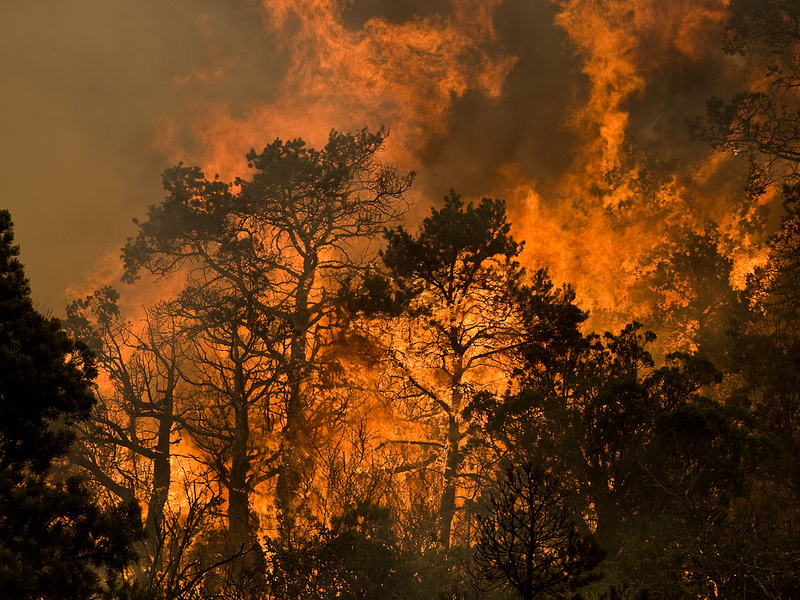
Western New Mexico last week. Photo: Karl Greer / US Forest Service, Gila National Forest
A lightning strike in the Gila National Forest three weeks ago is all it took to produce flames that today engulf more than 1,000 square kilometers. Nearly 1,200 people are involved in fighting the fire on and around Turkeyfeather Mountain, using 10 helicopters, 63 fire engines, 30 water tenders and seven bulldozers. So far the blaze is only about 20 percent contained. High winds have prevented the construction of firebreaks.
The good news, if we can call it that, is that the fire is raging in places that are largely uninhabited. The main evacuation took place in a privately owned ghost town. Firefighters were able to save the buildings by putting fire-retardant foil around them and keeping them damp. They say they will allow visitors to return this week. Generally, they are optimistic that the fire will soon run out of fuel.
Hardly a year goes by when some part of the American West isn’t on fire. In 2011, only a few months before the Arizona fire, Texas was devastated. In 2010, California was hit, as it so often is. In recent years, Nevada, Utah, Wyoming and Oregon have all taken turns as well. Surely it wasn’t always like this.
Fire ecologist Dan Falk of the University of Arizona says that fire is a natural part of the ecosystem of the American West. It’s part of a process of destruction and renewal. Traditionally, however, fires would not get to be very large before they put themselves out, he explained to Wired magazine.
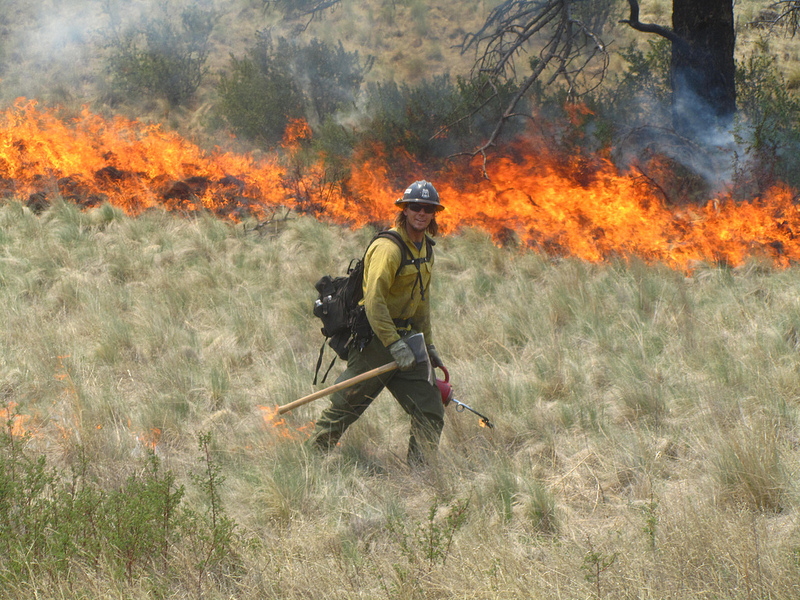
Fighting fire with fire. Photo: Alan Sinclair / US Forest Service, Gila National Forest
Over the last century, as more people have gone to live in remote areas, they’ve acted to protect themselves by putting out every small fire near them. This has allowed shrubs to grow and brush to gather within the forest. When a fire comes, there are no empty spaces to stop it.
Falk says this has the potential to change the ecosystem permanently. The tall, ancient Ponderosa pines that are burning down will be replaced by smaller species. “It will convert to a more shrubby ecosystem. The system will have gone past the tipping point.”
“Fire is not something that happens to ecosystems,” Falk says. “It’s not like a hurricane or tornado or earthquake. It’s something they do. When you exclude it from the system, you’ll pay the price later.”
Nature always finds a way to prevail, but it might not always be in a way that we’re happy with.


